Looting & the Spoils of War · Article 1 of 20 · Across centuries
Looting, Pillage & the Spoils of War
This article separates the origins of conflict from the use of force, changes in ownership, and consequences for civilians. Its purpose is historical understanding, not justification of violence.
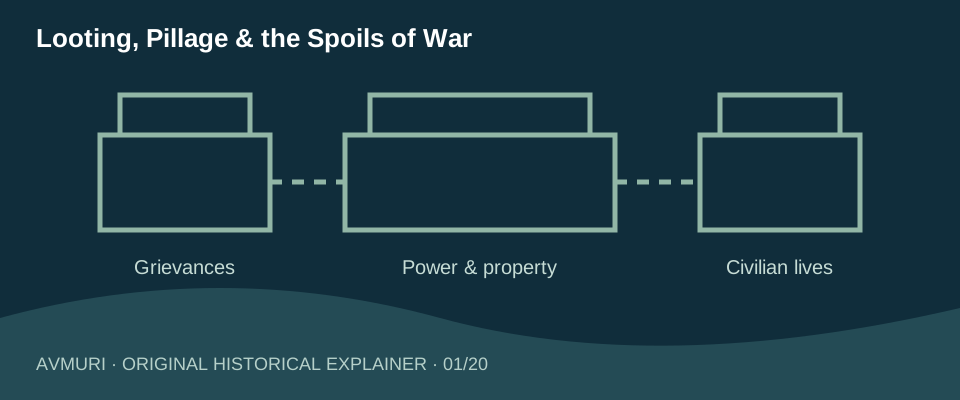
Historical setting & why events unfolded
An uprising may begin over taxation, exclusion or occupation, yet the taking of property is a separate act requiring separate explanation.
Property, power & the economic machinery of conflict
Looting is unauthorized taking in disorder; pillage is prohibited taking in armed conflict. A state may lawfully capture certain enemy military matériel, but that does not license theft of civilian goods.
What changed—and what did not
Destroyed inventories, abandoned homes and broken markets can reduce the ability of families to recover even when the fighting stops.
The distinction that matters
Confiscation under a revolutionary law, a criminal theft, wartime requisition and a lawful military capture are not identical categories. Each requires evidence about authority, purpose and the applicable law.
Effects on households and communities
A household may lose the documents needed to prove ownership, and businesses may lose both stock and the customers who once supported them.
A practical way to evaluate the evidence
Ask who took what, from whom, under which claimed authority, and whether independent records support the account.
Connecting the causes to the consequences
An uprising may begin over taxation, exclusion or occupation, yet the taking of property is a separate act requiring separate explanation. Looting is unauthorized taking in disorder; pillage is prohibited taking in armed conflict. A state may lawfully capture certain enemy military matériel, but that does not license theft of civilian goods. These developments should be analyzed in sequence: the original grievance, the choices of institutions and armed participants, the movement of property, and the distribution of long-term costs. A single label such as “revolution” or “looting” cannot by itself establish who acted lawfully or who benefited.
Destroyed inventories, abandoned homes and broken markets can reduce the ability of families to recover even when the fighting stops. A household may lose the documents needed to prove ownership, and businesses may lose both stock and the customers who once supported them. The most useful evidence includes contemporary records, independent investigations, property documentation and accounts from affected communities. Where testimony conflicts, the disagreement should be stated rather than hidden.