Looting & the Spoils of War · Article 17 of 20 · Mali, Burkina Faso and Niger, 2010s–2026
The Sahel: Armed Groups, Trade Routes & Civilian Survival
This article separates the origins of conflict from the use of force, changes in ownership, and consequences for civilians. Its purpose is historical understanding, not justification of violence.
Historical setting & why events unfolded
Weak public services, local disputes and insecurity interacted with insurgencies and military takeovers across parts of the Sahel.
Property, power & the economic machinery of conflict
Some armed actors seek revenue through extortion, illicit trade, control of routes and taxation imposed on communities.
What changed—and what did not
Displacement and insecurity interrupt farming, schooling and market access, making economic recovery difficult.
The distinction that matters
Religious identity alone cannot explain the conflict; local governance, climate pressures, land access and military strategy also matter.
Effects on households and communities
A farmer may face threats on the road to market and lose income even without fighting occurring in their village.
A practical way to evaluate the evidence
Look at who controls roads and services, not only who claims national political authority.
Connecting the causes to the consequences
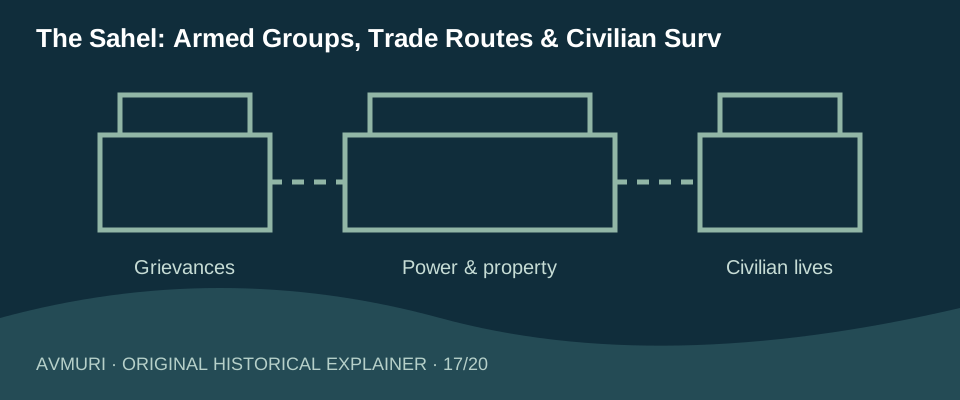
Weak public services, local disputes and insecurity interacted with insurgencies and military takeovers across parts of the Sahel. Some armed actors seek revenue through extortion, illicit trade, control of routes and taxation imposed on communities. These developments should be analyzed in sequence: the original grievance, the choices of institutions and armed participants, the movement of property, and the distribution of long-term costs. A single label such as “revolution” or “looting” cannot by itself establish who acted lawfully or who benefited.
Displacement and insecurity interrupt farming, schooling and market access, making economic recovery difficult. A farmer may face threats on the road to market and lose income even without fighting occurring in their village. The most useful evidence includes contemporary records, independent investigations, property documentation and accounts from affected communities. Where testimony conflicts, the disagreement should be stated rather than hidden.